I dusted off my Canon Digital Rebel and spent all night fiddling with the aperture and shutter speed. It had been a few years since I attempted night photography. Unfortunately only a handful of the 120+ photos I took were properly exposed and had little to no blur. Here are a few of the results. Enjoy.
Thursday, April 30, 2015
Lantern Fest 2015
Last weekend I joined several friends for the second annual Lantern Festival in Fountain, CO. This event takes place all over the United States and there are several events like it across the world. Thousands of people arrive in a field (or in our case a speedway), wait until dusk, and then light and release rice paper lanterns.
I dusted off my Canon Digital Rebel and spent all night fiddling with the aperture and shutter speed. It had been a few years since I attempted night photography. Unfortunately only a handful of the 120+ photos I took were properly exposed and had little to no blur. Here are a few of the results. Enjoy.
Wednesday, April 8, 2015
Recent Art Showings
Thanks to everyone who attended my art reception at the Cottonwood Center for the Arts March 28th. The paintings will be up until April 28th.
Furthermore, I still have a series of small works up at the Citizen's Gallery at Colorado Springs' City Hall until April 30th.
Friday, August 1, 2014
What Happened to Originality? Part Two
Every
time a new sequel or a franchise reboot is announced, there’s a flurry of mixed
reactions. Some people are genuinely excited to see their favorite movie
continue. Others roll their eyes and complain that Hollywood has run out of
ideas. Many are afraid that the original material will be so altered and
perverted that in the end, it will be unrecognizable. I see this one a lot with
book adaptations. I think most people just shrug their shoulders and say, “I
dunno. I guess it could work” or simply don’t care.
Two
years ago, I wrote how the box office was being saturated with sequels,
remakes, and adaptations. (I should have included those awful parody movies
like Scary Movie 5 and Vampires Suck.) I said that production
companies were playing it safe by rehashing movies that performed well last
year or basing movies off of superheroes, toys, or anything with a
predetermined audience who would see the movie no matter what. I said this came
at the expense of films with original plots and that audiences were just as
much to blame as studios for this trend.
This
surge of sequels is unlikely to disappear any time soon. Of the top ten highest
grossing movies of 2013, only two (Frozen
at #4 and Gravity at #7) were not a
sequel. (http://boxofficemojo.com/yearly/chart/?yr=2013&p=.htm)
I
still stand by the article, but…allow me to back tread a bit. As much as I’d
like to see more movies based on original material, some sequels and remakes
are not the death of creativity in Hollywood. In fact, some of them are quite good.
Let
me explain.
Really
there are two types of sequels.
The
first is a carbon copy of the original movie. All the actors resume their old
roles, the director and writer are usually the same, and the story follows the
formula of the original. A few changes are made (usually the setting) and the
stakes are sometimes raised. In Home
Alone, Kevin McAllister fends off two witless burglars with homemade traps,
discovers that an old person he was afraid of is just lonely and misunderstood,
and realizes that his family isn’t as terrible as he’d thought. In Home Alone 2: Lost in New York, he does
it all again with more elaborate traps and in a different setting. A similar thing happens in the Hangover movies and tons of
direct-to-DVD Disney sequels where the offspring of the original characters
often go on the same adventure their parents did. If it worked the first time,
why not a second?
The
second type of sequel is a little more creative. Rather than repeat the story
of the original movie, the sequel continues it. The characters have learned
from their past experiences and go on to do different things. They meet new
characters, face different obstacles, and often have to tie up loose threads
from the last movie. Many will adhere to a formula (Indiana Jones for example), but each installment has it’s own
identity.
In
fact, I’ve found that within this category, there are tons of movies based on a
book series. This makes perfect sense, of course. An ideal book series shows
the protagonist’s character arc through a series of adventures and, especially
in genre fiction, how the world changes around the protagonist. The Harry Potter series and The Hunger Games are great examples.
Both
Harry Potter and Katniss Everdeen undergo huge transformations as they take on
responsibilities, struggle to maintain key relationships, right major wrongs in
their world, and ultimately suffer for it. The Wizarding World and Panem go
from fairly stable societies that have overcome a dark past to outright civil
war. Values are questioned, power is shifted, and in the end, evil is defeated,
though it may rise again.
Compare
this with the Bond movies. There’s a long list of clichés in each Bond movie
(the beautiful femme fatales, the cool cars, gambling, the vodka martinis, the
gadgets, the over-the-top villains, and outrageous traps) and each movie
follows a very defined structure. A lot of franchises follow formulas, but the
problem with the Bond movies (at least until recently) is that there is little
continuity between films. Bond is a more of an embodiment of what men want to
be than a dynamic character. He has character traits, but over the movies, he
doesn’t learn anything. Furthermore, the same stock super villains come up with
ridiculous plans to either take over or destroy the world, Bond gets some cool
toys, goes to an exotic location, is nearly killed by guards, infiltrates the
villain’s lair, is kidnapped, escapes, and blows up the lair with a girl in his
arm. It’s fun to watch, but we’ve seen it all before.
Imagine
if in Empire Strikes Back, we find that
Luke Skywalker retired after destroying the Death Star, became a farmer and had
a son. His son is completely in the dark about his father’s true profession
until he and his wife are killed and a replacement Obi-wan has to teach the son
about the Force. They join two smugglers who aren’t Han Solo and Chewbacca and
blow up a second Death Star that the Emperor has built. Wouldn’t that have been
awful? Okay, not as awful as the prequels, but still pretty disappointing.
What
made Empire such a good movie – and
to some, an improvement on the original Star
Wars – was that it pushed the characters out of their comfort zone and out
of ours. It gave its audience everything they loved in the first movie, but it
also took risks.
His
training to become a Jedi and the climactic discovery of his father’s identity,
changes Luke from the cheerful young hero of the first movie into a wiser and
more enlightened – if somewhat traumatized but also well-rounded – person. Han
Solo and Leia go through probably one of the funniest but also most believable
romances put on screen and these two people who couldn’t stand each other at
the beginning of the movie realize their love for one another just before Han
is frozen and presumed dead. Darth
Vader, one of the most iconic villains of all time, even shows a moment of
tenderness for his son.
Where
the original Star Wars had an
exciting ending, Empire’s couldn’t be
more different. Most of the characters are at their lowest point when the movie
ends. The Empire has won this round, but the movie ends on an optimistic note.
Whereas in many sequels, we know what is going to happen, Empire refused to follow our expectations. The Dark Knight ends in a similar way. It has it’s own three-act
structure and similar themes of justice and good vs. evil, but the stakes have
been raised. The obstacles are still there when the movie ends and we want to
know how all of this is going to be resolved in the third film. A truly good
sequel forces the characters to mature, progresses the story instead of
repeating it, and makes everything from the first movie just a little grander.
Reboots
and remakes aren’t entirely without merit, either. When adapting material that
is already culturally well-known, a director has to reinvent the story a little
bit or film it in an original way and it’s always interesting to see what
approach a director will take. Of course, not all of it works. Some stray too
far from the source material (Guess Who?,
starring Ashton Kutcher, turns Guess
Who’s Coming to Dinner? into a bad comedy) while others cling too closely
to it (Gus Van Sant’s shot-for-shot color remake of Psycho just makes you wish you were watching the original). But for
every remake of Godzilla or The Day the Earth Stood Still, there’s a
film that retells the original story and can exist as a self-contained film
rather than an add-on. Sometimes it can be an improvement on the original or
even eclipse it. Has anybody seen the original Scarface (1932) or Ocean’s
Eleven (1960)?
I’d
argue that for some characters to continue their relevance in popular culture,
they have to be re-imagined.
The
Adam West Batman series in the 1960’s was very much a product of its time. It’s
enjoyable for its campiness, but has little substance otherwise. People probably
would have continued to view Batman as a silly character if it hadn’t been for
Frank Miller’s The Dark Knight Returns.
Tim Burton would continue this
more serious version of the Caped Crusader in his films. Both Miller and Burton
added the conflict, mystery, and darker morality that is now synonymous with
Batman. Batman became a character instead of a cartoon. Ironically, the next reboot
by Joel Schumacher would revert to the campy, colorful, pun-ridden tone of the
Adam West and then reversed when Christopher Nolan began his Batman reboot.
Personally,
I’d say each of these movies is worth enduring if Nolan’s trilogy is the end
result. I know many consider Burton’s Batman
to be the best Batman movie, but I really love the complexity and philosophy of
the reboot. With references to terrorism, the morality of fighting crime
outside the justice system vs. within it, and becoming the villain in order to
stop the villain, Nolan’s Dark Knight fits post-9/11 America the way Burton’s
Batman can’t. Not that that is a fault of Burton’s, of course. They are two
very different interpretations and I simply prefer the latter.
But
Nolan could certainly make an action movie about crime, morality, and
vigilantism using original characters. So why didn’t he? Well, obviously using
Batman will draw more of an audience, but more importantly, I think Batman is
such a cultural icon, using him will have more dramatic weight. Batman has to
represent all the things that Batman has always represented in all his various
incarnations, but he subsequently has to reflect our time. In The Dark Knight, he has to do some
rather unflattering things to stop his adversaries, things that may or may not
be justified. Because we already know Batman as a character, he is easier to
empathize with when he does these things. With a completely new character, we
may just see him as a corrupted cop when he wiretaps an entire city or breaks a
man’s legs to get information. By using a pre-established character, Nolan can
test what we think we know about him.
Superman
has likewise been adapted over the years, though the reception of his latest
movies is mixed. In Zach Snyder and Christopher Nolan’s Man of Steel, Superman is in darker territory. Again, the stakes
are higher, the tone is more serious, and he has to change throughout the
movie, even doing things that push him out of his comfort zone as a character.
Now these are all the criteria I listed for reboots and sequels that expand
upon or even improve upon the original, so why hasn’t it worked here?
It
really comes down to character. While Superman is just as well-known as Batman,
Superman is a much more static character. Batman has always occupied the gray
area between right and wrong and is much more flexible in what he will and will
not do to battle evil. Superman has always been incorruptible and well…perfect.
A little too perfect. His moral code is basically that of a Boy Scout. Yes, he
has the tragic back story like Batman, but while Batman is a flawed human being
trying his best, Superman is more of a demigod who can do no wrong. It’s easy
to root for him, but hard for an audience to identify with him. What sort of
conflict would hold the length of a movie when the hero has no faults, never
second-guesses his motives, holds no grudges, and is the living embodiment of
Truth, Justice, and the American Way?
The
protagonist of a great movie needs to struggle, doubt, imagine giving up, and
in some cases even do some wrong before he overcomes his rival, but Superman’s
identity is so firmly cemented in the public consciousness as an incorruptible
hero, any attempts to give Superman more pathos or to push the boundaries of
right and wrong, is usually met with backlash. Of course, this is exactly what
Superman needs to be a compelling character, but when he kills his enemy in Man of Steel or arguable causes as much
damage to a city as the villain, it doesn’t feel like forcing the character to
mature like Luke Skywalker or show a dramatic arc like Harry Potter or Katniss
Everdeen, it simply feels out of character.
So
yes, while it is safer for studios to produce remakes and sequels, they will
continue to be as much of a gamble as original content. Some will become new
classics that inspire and entertain millions, some will bomb horribly, and many
will be modest successes that are quickly forgotten. Even though these movies
tread familiar ground, there will always be creativity of some sort even if it’s
poorly executed or never fully realized. Besides, while sequels and remakes
will continue to bombard the box office, I’m willing to endure five Transformers sequels and Twilight knock-offs for one Hunger Games.
Join
me in the third and final installment where I talk about originality as a
concept.
Sunday, September 8, 2013
Employed at Last
For the last six months, I've been looking for
work. I wasn't having a lot of success so I took an unpaid internship doing
grant writing and blogging for a nonprofit. As luck would have it, the week I
finished the internship, I got a job offer. One of my coworkers at the framing
store had left for our parent company, Michaels, and once a full-time position
opened up, she recommended me. I went in yesterday to fill out the paperwork
and I start the job Wednesday.
On one hand, I'm real glad to have this job. All
my credit cards are maxed and even though I'm getting unemployment, I'm barely
making my student loan payments. I'm just keeping my head above the water, so a
40 hour job with $11 an hour (hey, that's the most I've ever got!) is going to
be a real lifesaver. Hell, maybe I can save up some money and even buy my
family some decent Christmas presents. I'll be doing work I'm familiar with so
all I really have to learn is their computer system and whatever minor changes
they have in ordering. I get to work with a former coworker, so she can explain
how things differ and give me some pointers. I'll even get health insurance.
On the other hand. I feel like I'm back at
square-one. I wanted a job and now I have a job, but somehow I feel like I've
settled. When I got out of college, I took this framing job telling myself I
would only be there for a little while and soon find a job in my field and be
able to move out of my mom's and start a life of my own. Well, three years
passed and it didn't happen. Getting laid off was a bit of a wake-up call. I
researched grant writing, freelance, and technical writing jobs and got an
internship that gave me some much-needed experience. Now I'm back at retail
once again. I know I should be happy, but it feels like I didn't get anywhere.
I suppose I can always work this job and keep
applying for better jobs, but a little voice in my head tells me I'm going to
be doing retail for the rest of my life. My life is passing me by and I'm not
making any progress. I haven't got a job in my field, I'm not putting my degree
to use, I haven't even written that damn book or gotten more than one or two
paintings in a gallery much less sold one.
I shouldn't complain so much. Some of my friends
have graduated with master's degrees in the sciences and have only done
seasonal work and internships thus far. I just hate having to put my ambitions on hold so I can pay the bills.
Updates coming. I promise.
Friday, May 10, 2013
Pieces Series (part two)
I have a substantial update coming, I really do. I've just had a lot going on in my personal life. The company I worked for closed a few stores and mine was one of them. So I've spending most of my time job hunting. However, I have managed to get some painting done. Here's an update:
This last one doesn't have a reference picture. I just made it up.
Sunday, December 30, 2012
What Happened to Originality? Part One
Critics
and audiences have for years been wondering why Hollywood keeps churning out so
many sequels, prequels, remakes, and movies that just seem to be the same? More
and more movies seem to have the same tired plotlines, the same stereotype
characters, and the same clichés. I remember watching the preview for Avatar. From those two minutes, I
figured out the entire movie: the conflict, the character motivations, the
so-called twist at the ending. The only thing I was missing was three hours of
special effects and a terrible wannabe Celine Dion song at the end.
2011
broke the record with 27 sequels, prequels, and remakes: Cars
2, Diary of a Wimpy Kid 2: Rodrick Rules, The Hangover Part II, Happy Feet 2,
Hoodwinked Too! Hood Vs. Evil, Johnny English Reborn, Kung Fu Panda 2, Piranha
3D, Sherlock Holmes: A Game of Shadows, Alvin
and The Chipmunks: Chipwrecked, Big Momma’s House: Like Father, Like Son,
Madea’s Big Happy Family, Paranormal Activity 3, Transformers: Dark of
the Moon, Mission: Impossible - Ghost Protocol, Pirates of the Caribbean: On
Stranger Tides, Scream 4, Spy Kids 4: All The Time in the World, The
Twilight Saga: Breaking Dawn (Part One), Fast Five, Final Destination 5, Puss
in Boots, X-Men: First Class, Winnie the Pooh, The Muppets, Rise
of the Planet of the Apes, and
Harry Potter and the Deathly Hallows (Part Two).
This isn’t a new phenomenon, of course. Halloween started out as an independent
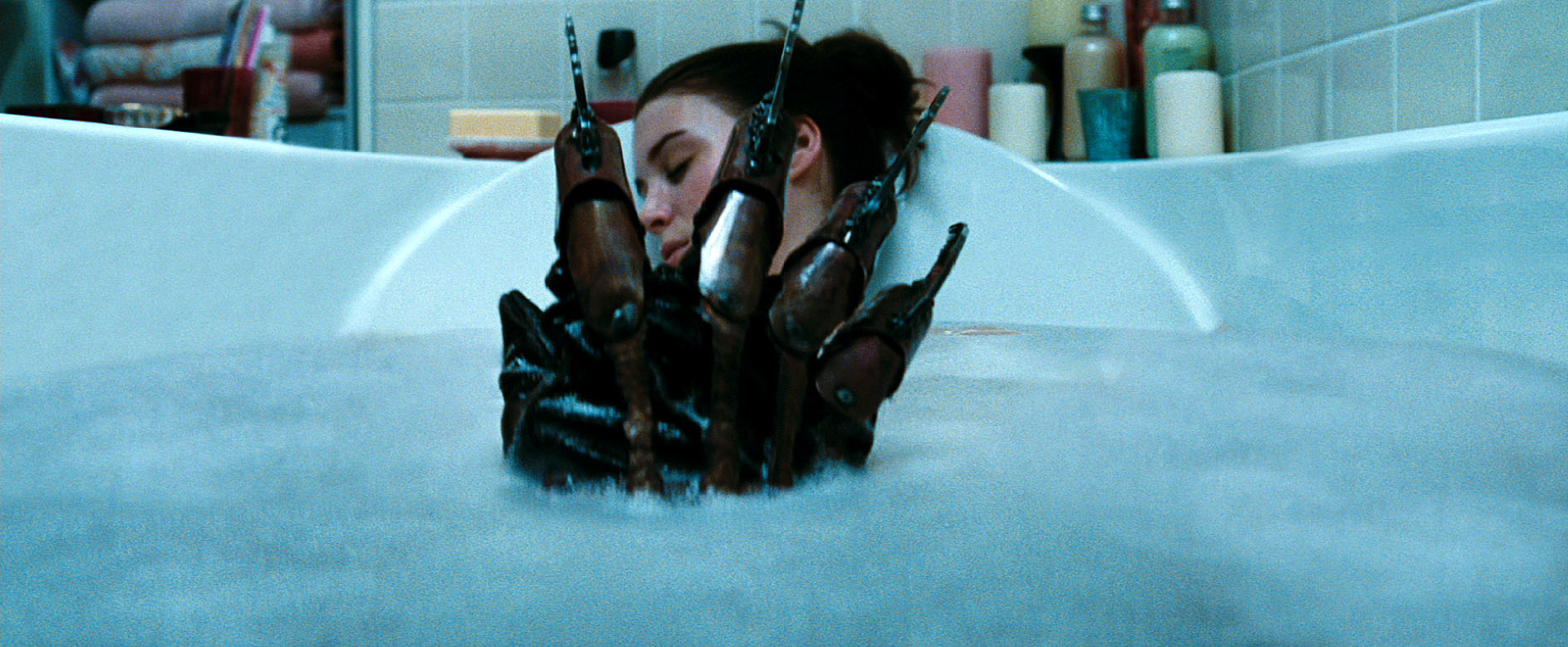
film on a tiny budget but now has ten films to its name; A Nightmare on Elm Street has eight sequels; Friday the 13th has eleven sequels; and The Land Before Time has twelve sequels,
two sing-a-longs, and a TV series. Remember when Disney was relying on Pixar to
make decent movies and had somehow fallen from the greatest American animation
studio to an assembly line of direct-to-video sequels? Who was really
clambering for Lady and the Tramp 2:
Scamp’s Adventure or a sequel to The
Fox and the Hound? If Disney had taken all the time and money put into
those sequels and channeled it into a project like Aladdin or The Lion King,
they could have really made something to be proud of. So why didn’t they?
Why don’t we have more movies like Inception, Fantasia, or Eternal Sunshine
of the Spotless Mind? Doesn’t the movie industry value creativity anymore?
What happened to originality?
Well, originality is still in Hollywood. It’s
just very hard to find. Movie audiences have an idealized fantasy of how movies
are really made. Many people think there’s a writer working for years on a
perfect screenplay. He’s working two minimal wage jobs in the day and he comes
home and works through the night on his dream. He pitches it to a movie studio
and instantly, they recognize its genius and pay him $10 million for it, a
director falls in love with the script, actors want a part of it, the studio
gives them $200 million and they go off and make a great movie.
That does happen but it’s extremely rare. While
everyone in the movie industry wants to regard their work as art, when all is
said and done, a movie is a commodity. It has to make more money than it cost
to make in order for it to be successful. Like any commodity, it comes down to
demographics. In reality, the idea for movies mostly comes from the producers.
“We need an action movie that’s going to mimic the style of all the movies with
that gritty, realistic shaky-cam work to appeal to the 15-30 male demographic,
but we should add in a love story for the women.” The writer gets to work but
has to write the script to cater to these demands, then rewrite the entire
thing when Shia LeBeouf is cast as the lead. Even if he or she does this
successfully, the producers can change their mind at any time. If it’s decided that
the script it too dark, some pop culture jokes are shoe-horned in. If an
actress is replaced, her character has to change to suit the new actress.
Sometimes the director has a loose idea for a story and relies on a
screenwriter to flesh it out. Then the director might not think the script is
on par with his own “vision” and half the script is tossed out anyway.
Studios have to follow the current market. If
something is popular, they want to cash in on it before it’s become tired. They
want to mimic movies that are making lots of money. It’s amazing how some
studios will all-out copy others. For example, Pixar made Finding Nemo in 2003. It wasn’t daringly original or
industry-changing, but it was a great family movie (Every time I go to an
aquarium and see clown fish, there’s always a child there saying it’s Nemo). Every
kid has seen this movie. It made $867,893,978 at the box office. DreamWorks saw
this and decided they too could make an animated underwater adventure. Instead
of writing a script around a father and son’s relationship, learning to
continue with life after tragedy, and growing up, this movie was parody of a
mob movie. Because what kid hasn’t seen Good
Fellas or The Godfather? Jack
Black, Renée Zellweger, Will Smith, Martin Scorsese, and
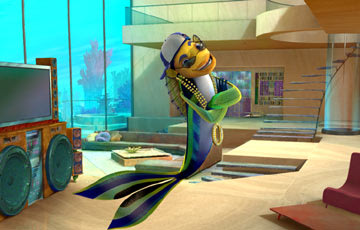
Robert DeNiro were all hired for voice work. One year later, we got Shark Tale.
I’m convinced that movie studios are spying on
one another. How else can you explain a pair of strikingly similar movies
released around the same time? Such movies include Armageddon and Deep Impact
(1998), The Prestige and The Illusionist (2006), Dante’s Peak and Volcano (1998), Babe and Gordy (1995), Artificial Intelligence and Bicentennial
Man (1999), Dark City (1998) and The Matrix (1999), Antz and A Bug’s Life
(1998), Mission to Mars and The Red Planet (2000), and this year, Mirror, Mirror and Snow White and the Huntsman. C.O.R.E. Animation (of Canada) was
working on a movie with a gang of animals that escape from the Central Park
Zoo. Disney released it in 2006. No, it’s not Madagascar. Dreamworks apparently found a leaked script, made a
movie that was actually better, and released it a year earlier. The Disney
movie was called The Wild. It made
almost no money, disappointed critics and audiences, and now hardly anyone
remembers it. Madagascar, however,
has a TV series and is on it’s third sequel.
Studios are a business. Originality is great and
all, but it’s very risky. It’s much easier and more profitable to make a movie based
on a book, a toy, or a TV show that has a definite audience before the movie’s
even made. When adapting The A-Team
into a movie, executives at 20th Century Fox knew that people who
watched the show in the 80’s were definitely going to pay $7.50 to see this. Columbia
Pictures wasn’t going to pass up on The DaVinci
Code when someone suggested turning the best-selling book of the century
into a film. Just look at how many movies are being made out of things we
watched and played with as children. We already have an attachment to
Transformers action figures, the Teenage
Mutant Ninja Turtles TV show, even the Pirates
of the Caribbean ride at Disneyland. Does it translate to good plots,
convincing characters, and a few Oscars along the way? No, but it sure is great
business.
Doing something original is always going to be a
gamble. An original movie could be a phenomenal success or it could be a box
office dud. The Blair Witch Project
was real experimental when it came to horror movies. It cost almost nothing to
make, had no special effects, and its actors were virtually unknown. It ended
up making $248,639,099. Being John Malkovich
was a witty dark-comedy about identity and the chance to literally be
someone else. It was released the same year as The Blair Witch Project but only made $32,382,381. Of course, a lot
of that has to do with marketing and how you brand your movie overseas, but it
still shows just how much variance there is in choosing to do something
new.
Of course, an original movie does strike gold
once and a while. Everyone breathes a breath of fresh air and praises the way
this movie forged new ground, defied conventions, refused to be categorized,
etc., etc. ,etc. The problem is that once this happens, everyone else is going
to try to imitate that success, then reference it, then parody it, until the
original idea is a nothing more than a cliché.
There are few genres where this is more true than
in horror movies. Look at the history of horror movies and you can easily
divide them into eras like periods of American literature. Throughout the 30’s
and 40’s, most were based on novels – Frankenstein,
Dracula, and Dr. Jekyll and Mr. Hyde – before spawning their own franchises and
having various characters meet (Frankenstein
Meets Dracula then, Freddy vs. Jason
and Alien vs. Predator now). In the
1950’s, movies like Godzilla and Invasion of the Body Snatchers
capitalized on the Cold War’s paranoia of foreigners and atomic weaponry, but
before long studios were only making the same movie about a mad scientist with
a monster destroying a city. Alfred Hitchcock’s Psycho is still regarded as a landmark but it began the “slasher”
genre. George A. Romero’s Night of the
Living Dead means another zombie movie every other year. Rosemary’s Baby and The Exorcist reintroduced
us to the occult and continue to inspire movies like The Rite and The Exorcism of
Emily Rose. In the 80’s, Halloween and
A Nightmare on Elm Street launched
their own franchises as the “slasher” movie was reanimated in the 90’s.
The
Ring, though a remake of a Japanese film, was seen as
an updated version of David Cronenburg’s Videodrome.
It ushered in a series of Japanese remakes like Dark Water and The Grudge
as well as movies that combined the paranormal and technology like Pulse and Feardotcom. Before it became it became a 7-part series, Saw was a pretty original concept that
had little gore and relied more on the acting and suspense than a house of Home Alone booby-traps gone wrong. It
inspired the “torture porn” era of Hostel,
Wolf Creek, The Human Centipede, and 24.
Now – for better or for worse – we’re in a remake phase.
So what’s a film buff to do?
Actually, I don't hate remakes and sequels. Some of my favorite movies are adaptations of someone else's work? How so? Check back in PART TWO and I'll explain.
Saturday, September 15, 2012
Pieces Series
*blows the dust off this blog*
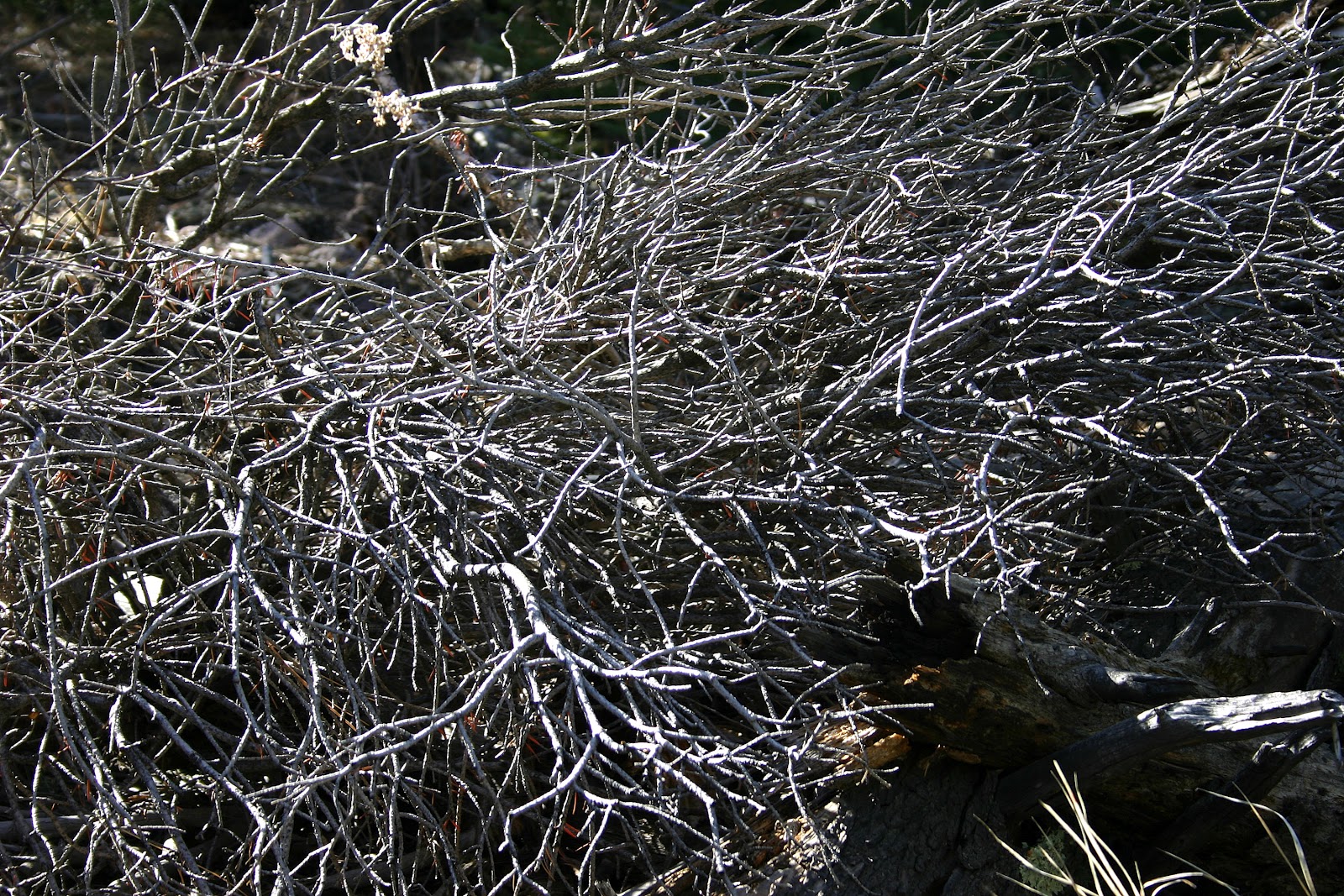
Sorry about the absence. I had a goddamn wildfire in my backyard, a few financial problems, and I've been getting more hours at work. Fortunately, I've had the chance to get back into painting. I bought these 11 x 14 multipack canvases months ago for practicing, but I'm thinking about doing a series of small works with them. I have about 40 blank ones. Going through all my nature photos, I realized most of them weren't real landscapes but close-ups of snow on branches, an arrangement of pebbles, the shadows of trees, etc. Why not do a series of just these little vignettes? It'd be much easier to do a few 11 x 14 paintings than one 40 x 60 painting, and if I mess up one of the little ones, it won't be any real loss. On a more economical note, it'd be easier to get these into a coffee shop or local gallery. People in this town eat this kind of art up like candy. Maybe I can finally earn some money with this art degree?
I have four done at the moment. As you can see below, I'm not really trying to do a photorealistic copy of the photos. Instead, I'm just trying to find lines and shapes and figure out how various colors can work together to create a sense of space and movement. I'm trying not to think about it too much. Keep watching this blog, there'll be more of these to come.


Subscribe to:
Posts (Atom)