Friday, May 10, 2013

Pieces Series (part two)


I have a substantial update coming, I really do. I've just had a lot going on in my personal life. The company I worked for closed a few stores and mine was one of them. So I've spending most of my time job hunting. However, I have managed to get some painting done. Here's an update: 


This last one doesn't have a reference picture. I just made it up.


Sunday, December 30, 2012

What Happened to Originality? Part One


Critics and audiences have for years been wondering why Hollywood keeps churning out so many sequels, prequels, remakes, and movies that just seem to be the same? More and more movies seem to have the same tired plotlines, the same stereotype characters, and the same clichés. I remember watching the preview for Avatar. From those two minutes, I figured out the entire movie: the conflict, the character motivations, the so-called twist at the ending. The only thing I was missing was three hours of special effects and a terrible wannabe Celine Dion song at the end.

2011 broke the record with 27 sequels, prequels, and remakes: Cars 2, Diary of a Wimpy Kid 2: Rodrick Rules, The Hangover Part II, Happy Feet 2, Hoodwinked Too! Hood Vs. Evil, Johnny English Reborn, Kung Fu Panda 2, Piranha 3D, Sherlock Holmes: A Game of Shadows, Alvin and The Chipmunks: Chipwrecked, Big Momma’s House: Like Father, Like Son, Madea’s Big Happy Family, Paranormal Activity 3, Transformers: Dark of the Moon, Mission: Impossible - Ghost Protocol, Pirates of the Caribbean: On Stranger Tides, Scream 4, Spy Kids 4: All The Time in the World, The Twilight Saga: Breaking Dawn (Part One), Fast Five, Final Destination 5, Puss in Boots, X-Men: First Class, Winnie the Pooh, The Muppets, Rise of the Planet of the Apes, and Harry Potter and the Deathly Hallows (Part Two).


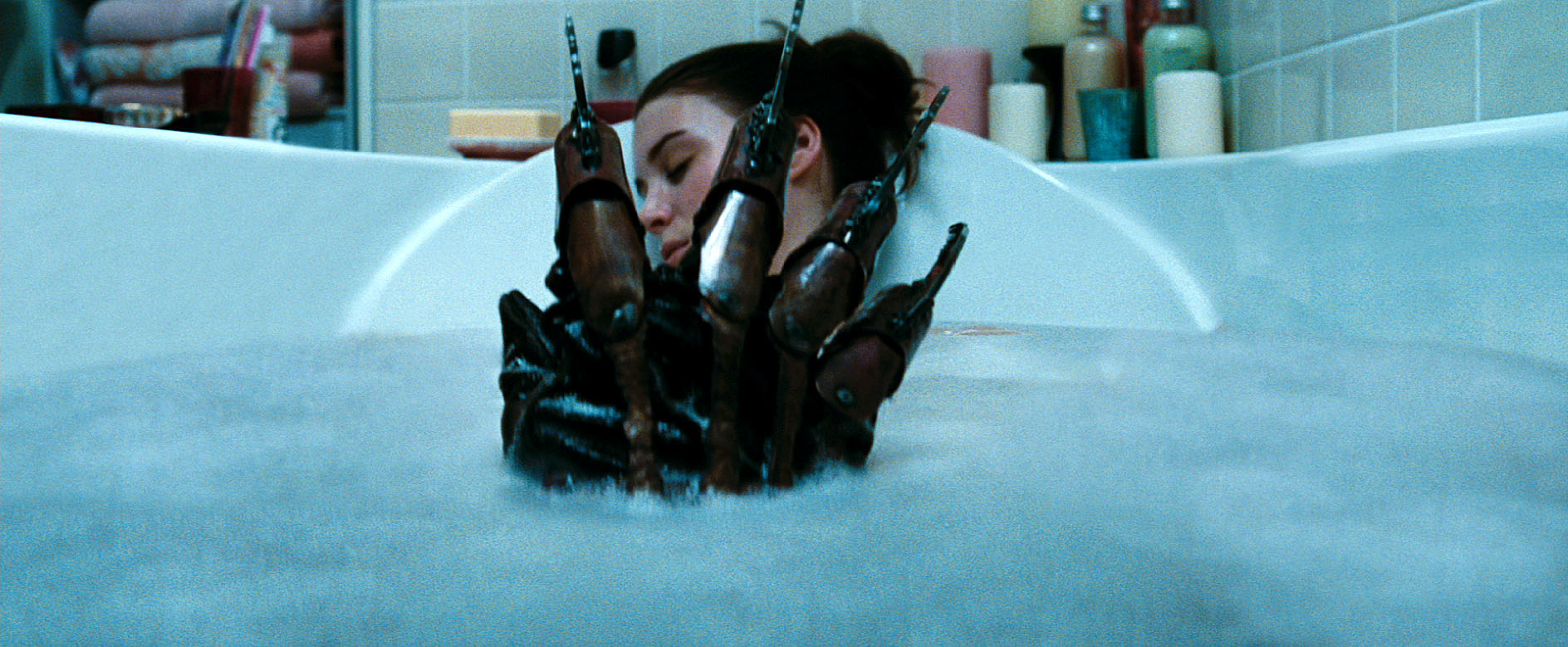
This isn’t a new phenomenon, of course. Halloween started out as an independent film on a tiny budget but now has ten films to its name; A Nightmare on Elm Street has eight sequels; Friday the 13th has eleven sequels; and The Land Before Time has twelve sequels, two sing-a-longs, and a TV series. Remember when Disney was relying on Pixar to make decent movies and had somehow fallen from the greatest American animation studio to an assembly line of direct-to-video sequels? Who was really clambering for Lady and the Tramp 2: Scamp’s Adventure or a sequel to The Fox and the Hound? If Disney had taken all the time and money put into those sequels and channeled it into a project like Aladdin or The Lion King, they could have really made something to be proud of. So why didn’t they?

Why don’t we have more movies like Inception, Fantasia, or Eternal Sunshine of the Spotless Mind? Doesn’t the movie industry value creativity anymore? What happened to originality?

Well, originality is still in Hollywood. It’s just very hard to find. Movie audiences have an idealized fantasy of how movies are really made. Many people think there’s a writer working for years on a perfect screenplay. He’s working two minimal wage jobs in the day and he comes home and works through the night on his dream. He pitches it to a movie studio and instantly, they recognize its genius and pay him $10 million for it, a director falls in love with the script, actors want a part of it, the studio gives them $200 million and they go off and make a great movie.

That does happen but it’s extremely rare. While everyone in the movie industry wants to regard their work as art, when all is said and done, a movie is a commodity. It has to make more money than it cost to make in order for it to be successful. Like any commodity, it comes down to demographics. In reality, the idea for movies mostly comes from the producers. “We need an action movie that’s going to mimic the style of all the movies with that gritty, realistic shaky-cam work to appeal to the 15-30 male demographic, but we should add in a love story for the women.” The writer gets to work but has to write the script to cater to these demands, then rewrite the entire thing when Shia LeBeouf is cast as the lead. Even if he or she does this successfully, the producers can change their mind at any time. If it’s decided that the script it too dark, some pop culture jokes are shoe-horned in. If an actress is replaced, her character has to change to suit the new actress. Sometimes the director has a loose idea for a story and relies on a screenwriter to flesh it out. Then the director might not think the script is on par with his own “vision” and half the script is tossed out anyway.

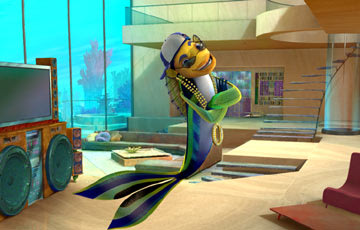
Studios have to follow the current market. If something is popular, they want to cash in on it before it’s become tired. They want to mimic movies that are making lots of money. It’s amazing how some studios will all-out copy others. For example, Pixar made Finding Nemo in 2003. It wasn’t daringly original or industry-changing, but it was a great family movie (Every time I go to an aquarium and see clown fish, there’s always a child there saying it’s Nemo). Every kid has seen this movie. It made $867,893,978 at the box office. DreamWorks saw this and decided they too could make an animated underwater adventure. Instead of writing a script around a father and son’s relationship, learning to continue with life after tragedy, and growing up, this movie was parody of a mob movie. Because what kid hasn’t seen Good Fellas or The Godfather? Jack Black, Renée Zellweger, Will Smith, Martin Scorsese, and Robert DeNiro were all hired for voice work. One year later, we got Shark Tale.

I’m convinced that movie studios are spying on one another. How else can you explain a pair of strikingly similar movies released around the same time? Such movies include Armageddon and Deep Impact (1998), The Prestige and The Illusionist (2006), Dante’s Peak and Volcano (1998), Babe and Gordy (1995), Artificial Intelligence and Bicentennial Man (1999), Dark City (1998) and The Matrix (1999), Antz and A Bug’s Life (1998), Mission to Mars and The Red Planet (2000), and this year, Mirror, Mirror and Snow White and the Huntsman. C.O.R.E. Animation (of Canada) was working on a movie with a gang of animals that escape from the Central Park Zoo. Disney released it in 2006. No, it’s not Madagascar. Dreamworks apparently found a leaked script, made a movie that was actually better, and released it a year earlier. The Disney movie was called The Wild. It made almost no money, disappointed critics and audiences, and now hardly anyone remembers it. Madagascar, however, has a TV series and is on it’s third sequel.

Studios are a business. Originality is great and all, but it’s very risky. It’s much easier and more profitable to make a movie based on a book, a toy, or a TV show that has a definite audience before the movie’s even made. When adapting The A-Team into a movie, executives at 20th Century Fox knew that people who watched the show in the 80’s were definitely going to pay $7.50 to see this. Columbia Pictures wasn’t going to pass up on The DaVinci Code when someone suggested turning the best-selling book of the century into a film. Just look at how many movies are being made out of things we watched and played with as children. We already have an attachment to Transformers action figures, the Teenage Mutant Ninja Turtles TV show, even the Pirates of the Caribbean ride at Disneyland. Does it translate to good plots, convincing characters, and a few Oscars along the way? No, but it sure is great business.

Doing something original is always going to be a gamble. An original movie could be a phenomenal success or it could be a box office dud. The Blair Witch Project was real experimental when it came to horror movies. It cost almost nothing to make, had no special effects, and its actors were virtually unknown. It ended up making $248,639,099. Being John Malkovich was a witty dark-comedy about identity and the chance to literally be someone else. It was released the same year as The Blair Witch Project but only made $32,382,381. Of course, a lot of that has to do with marketing and how you brand your movie overseas, but it still shows just how much variance there is in choosing to do something new. 

Of course, an original movie does strike gold once and a while. Everyone breathes a breath of fresh air and praises the way this movie forged new ground, defied conventions, refused to be categorized, etc., etc. ,etc. The problem is that once this happens, everyone else is going to try to imitate that success, then reference it, then parody it, until the original idea is a nothing more than a cliché.

There are few genres where this is more true than in horror movies. Look at the history of horror movies and you can easily divide them into eras like periods of American literature. Throughout the 30’s and 40’s, most were based on novels – Frankenstein, Dracula, and Dr. Jekyll and Mr. Hyde – before spawning their own franchises and having various characters meet (Frankenstein Meets Dracula then, Freddy vs. Jason and Alien vs. Predator now). In the 1950’s, movies like Godzilla and Invasion of the Body Snatchers capitalized on the Cold War’s paranoia of foreigners and atomic weaponry, but before long studios were only making the same movie about a mad scientist with a monster destroying a city. Alfred Hitchcock’s Psycho is still regarded as a landmark but it began the “slasher” genre. George A. Romero’s Night of the Living Dead means another zombie movie every other year. Rosemary’s Baby and The Exorcist reintroduced us to the occult and continue to inspire movies like The Rite and The Exorcism of Emily Rose. In the 80’s, Halloween and A Nightmare on Elm Street launched their own franchises as the “slasher” movie was reanimated in the 90’s.


The Ring, though a remake of a Japanese film, was seen as an updated version of David Cronenburg’s Videodrome. It ushered in a series of Japanese remakes like Dark Water and The Grudge as well as movies that combined the paranormal and technology like Pulse and Feardotcom. Before it became it became a 7-part series, Saw was a pretty original concept that had little gore and relied more on the acting and suspense than a house of Home Alone booby-traps gone wrong. It inspired the “torture porn” era of Hostel, Wolf Creek, The Human Centipede, and 24. Now – for better or for worse – we’re in a remake phase.

So what’s a film buff to do?

Actually, I don't hate remakes and sequels. Some of my favorite movies are adaptations of someone else's work? How so? Check back in PART TWO and I'll explain.

Saturday, September 15, 2012

Pieces Series

*blows the dust off this blog* 

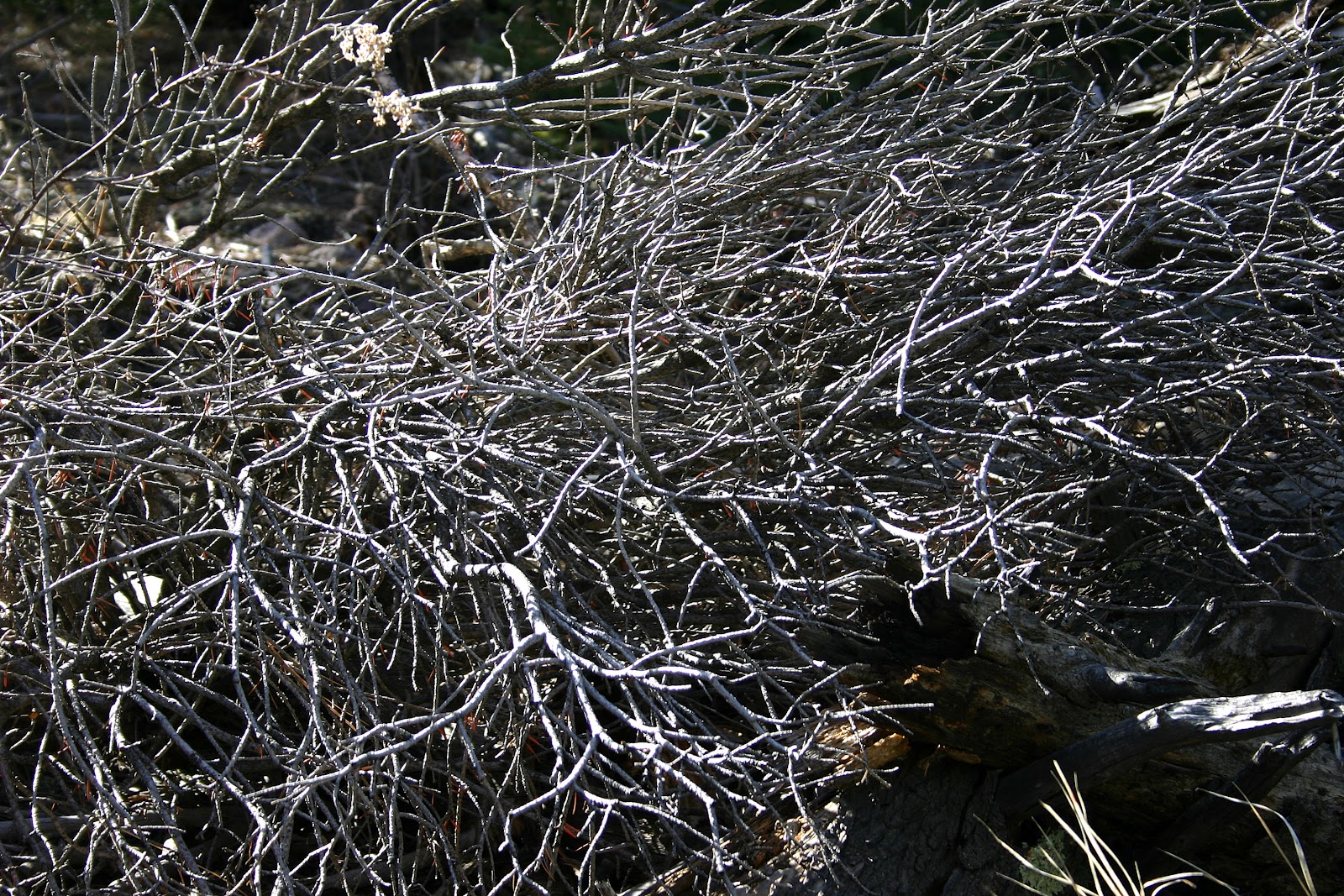
Sorry about the absence. I had a goddamn wildfire in my backyard, a few financial problems, and I've been getting more hours at work. Fortunately, I've had the chance to get back into painting. I bought these 11 x 14 multipack canvases months ago for practicing, but I'm thinking about doing a series of small works with them. I have about 40 blank ones. Going through all my nature photos, I realized most of them weren't real landscapes but close-ups of snow on branches, an arrangement of pebbles, the shadows of trees, etc. Why not do a series of just these little vignettes? It'd be much easier to do a few 11 x 14 paintings than one 40 x 60 painting, and if I mess up one of the little ones, it won't be any real loss. On a more economical note, it'd be easier to get these into a coffee shop or local gallery. People in this town eat this kind of art up like candy. Maybe I can finally earn some money with this art degree?


I have four done at the moment. As you can see below, I'm not really trying to do a photorealistic copy of the photos. Instead, I'm just trying to find lines and shapes and figure out how various colors can work together to create a sense of space and movement. I'm trying not to think about it too much. Keep watching this blog, there'll be more of these to come.


Sunday, January 22, 2012

Ten of the Most Overrated Books

*pulls on his bulletproof vest, straps on his helmet and life vest, readies an epinephrine shot, and locks himself in a fallout shelter with his computer* Okay then. 


Just a couple of things. This is all my personal opinion. If you absolutely love one of these books, more power to you. They're just books that garnered tons of praise, all kinds of award, and when I sat down to read them, they fell flat. The writing style was obnoxious, the narrator was real didactic, the characters were annoying, or the plot just had too many holes. Now I'm not saying these are the most overrated books ever. These are just the ones I have read. That's why you won't find any of the Twilight books on here or War and Peace. I'm sure I'll find plenty of welcome additions to this list over the years.


That said, here they are in no particular order (except the last one which I hold a special grudge against):


1.     Dracula, by Bram Stoker

Often considered a cornerstone of gothic literature and modern horror, Dracula is responsible for popularizing the vampire, thus, inspiring several movie franchises, book series, and one of the most famous accents. The book itself starts out strong with real estate agent Jonathan Harker travelling to Count Dracula’s castle. Everything it there: the wolves, the famous lines, the chilling atmosphere, the three slutty vampires eating an infant, but it doesn’t last. Most of the book is a series of letters between Lucy and Mina and it is boring as hell. Dracula and the psychopath Renfield are the most fascinating characters but they don’t get much time in the novel. It mostly centers around Van Helsing, Jonathan, and the two women. Though he’s be reinterpreted as vampire-slaying badass in recent movies and comic books, he’s more of a doctor here and really doesn’t have much depth or a good back story. I won’t spoil the ending for you, but for a villain of Dracula’s caliber, I felt a little cheated how easily he was defeated. The horror is definitely there, but in small amounts. The rest of the book just drags too much to be a classic.

2.     The Catcher in the Rye, by J.D. Salinger
I think I read this book for the same reason many other adolescents have picked it up: it was controversial. The book was a sensation when it came out, it has been pulled from libraries, banned in schools, and was supposedly what led the crazed fan Mark David Chapman to shoot his idol, John Lennon. It continues to be part of our culture: a musing probe into teenage insecurity, anger, and melancholy. I guess, but I was pretty underwhelmed. I’m probably supposed to identify with Holden Caulfield, a lonely boy who – recently expelled from another prep school – wanders about New York City getting drunk and talking to random people, but he just comes off as a whiney emo brat who doesn’t realize how privileged he is. “Oh, woe is me!” The story has little focus and little conflict; it’s like a pretentious bastard recorded every genius thought he had as he ran errands in New York City. I don’t necessarily object to unlikeable protagonists, but I really don’t think Holden carries the novel well. I’d like to get to know Jane or Allie better, but we’re stuck with Holden. I guess I appreciate what the novel did for modern fiction, but I personally can’t stand this book.

3.     The Bell Jar, by Sylvia Plath
Often cited as a landmark in feminist and twentieth-century literature, The Bell Jar is a thinly disguised autobiography that centers on college undergrad, Esther, who has been born with no personality. The Bell Jar is supposed to be about her mental breakdown but it really just sounds like the whining of a privileged rich girl. Nothing leads up to the breakdown; it just comes out of nowhere and when it does arrive, it’s not very interesting. She doesn’t change or discover anything about herself and the cliffhanger ending where she just goes into a doctor’s office and the book ends is infuriating. The first half is filler. I guess it’s meant to show what her life was like before the breakdown but nothing she does reveals anything about her character and the other characters that are introduced have nothing to do with the story and are never heard from again. Keep this one on the shelf and pick up One Flew Over the Cuckoo’s Nest instead.


4.     White Noise, by Don DeLillo
I’ve found that most of DeLillo’s books are like the Colorado Avalanches: both the novels and the games start out strong but get weaker and weaker as they go. One of his later novels - Mao II – opens with a pretty spectacular mass wedding in a baseball stadium, evoking questions of individuality, conformity, religion, and entertainment. White Noise opens with college students moving into their new dorms. As commonplace as that sounds, it’s about as exciting as this novel gets. There’s an assassination, a chemical leak that forces a town to evacuate, and a mysterious drug that eliminates the fear of death, yet somehow it all seems incredibly boring.

I think it comes down to the characters. DeLillo’s characters are just mouthpieces for his own reflections. Granted a lot of authors do that and there’s nothing wrong with having a character being defined by their beliefs (Dostoyevsky does it well in The Brothers Karamazov), but in White Noise, that’s all the characters are. They have no dimension, they discuss death and modernism as dully as a philosophy dissertation, and when they’re in peril, I really just don’t care. There’s just nothing likeable or human to attach to. This isn’t the first book to talk about commercialism and it’s effects in Suburbia and certainly not the best.

5.     Gravity’s Rainbow, by Thomas Pynchon
“My book is an impenetrable labyrinth of literary masturbation. No one on Earth can understand it. It must be profound!”


6.    A Confederacy of Dunces, by John Kennedy Toole
This book isn’t awful; it’s really just a mediocre book. The reason I’m listing it here is because it has such a huge following. Toole couldn’t find a publisher and committed suicide. Lo and behold, ten years later it’s published and wins the Pulitzer. People claim this novel is hysterical, but it really isn’t. I chuckled a couple of times, but that’s it. Toole creates a colorful cast of characters but aside from the mother, they’re pretty one-dimensional. Ignatius, the main character, is a loud-mouthed, preachy, self-inflated bum. He’s a lot of fun as an unlikeable main character, but the problem is that he, too, is a one-note character. As in The Bell Jar, he doesn’t change, he doesn’t learn anything about himself, he just keeps on being an annoying leech only with his girlfriend instead of his mother. The end doesn’t resolve a lot of plot points and I remember thinking, “Really, that’s it?”


7.    The Lord of the Rings, by J.R.R. Tolkien
*dodges bullets* I’m sorry, I’m sorry. I had to put it on here. This is another book where I appreciate what it did for the genre much more than I appreciate the book.  I like that the various cultures of Middle Earth have their histories and languages and that there’s definitely a world created beyond the four corners of the page, but Tolkien just couldn’t edit it down. There are massive long-winded descriptions of fields, how the elves make win, and the lineage of dwarf kings. The plot and the characters definitely take a back seat to the setting. It’s hard to get emotionally involved when the story is interrupted by a five-page tangent on a forest.

This is one of my few exceptions to the rule “The book was better than the movie.” Peter Jackson’s film trilogy surprisingly does a better job developing its characters and establishing its plot than the book does. Tolkien has his moments – Gollum is a great character – but The Lord of the Rings reads much more like a history textbook than a story. This should be no surprise since Tolkien was a linguist, historian, and Oxford professor, but he managed to pull everything off with The Hobbit, I just don’t know why he failed to do it here.

8.   The DaVinci Code, by Dan Brown
This book only became a bestseller because it was controversial. The actual history of how the Catholic Church got started and how the religion changed over time is pretty fascinating and I think a lot of people wanted to look at some of the origins of their beliefs but the research is incredibly sloppy. First and foremost, the Prior of Scion was disproven as a hoax by a Frenchman trying to claim he was descended from Christ in the late 50’s. Brown gets a lot of basic facts wrong like his assertion that the Olympic Games were in honor of the Sacred Feminine with the pentacle as the symbol. Actually, the games were meant to honor Zeus and the games had no emblem until they were revived in France in the 19 century. When the author is constantly getting his facts wrong, it’s hard to take the book seriously.

Still, The DaVinci Code is a work of fiction. So what if some facts are skewed? Well, the book fails there as well. The tone of the narrator is preachy, always pushing his social opinions and often, it’s hard to tell if where in Langdon’s thoughts or the narration. There’s all these holes in the story. Why didn’t any of Sophie’s family try to find her if she was allegedly from the Merovingian bloodline? Do the police just not think to take her and Langdon in for questioning? Really, nobody found that tomb when they were building the Louvre? Not to mention all the “Well, that’s what they want you to think” logic.

9.   The Brief Wondrous Life of Oscar Wao, Junot Díaz
This is another terrible book that was flooded with awards including the National Book Critics Circle Award and the Pulitzer. This book takes place in New Jersey and the Dominican Republic so it should have had a interesting sense of culture but instead we just get tons of “Spanglish,” slang, and footnotes which really don’t add anything to the already thin plot. The sense of place just isn’t there. Also, the narration is choppy and real difficult to get into. The copious footnotes are just distracting; why can’t they be worked into the narrative?

Furthermore, Díaz inserts as many references to nerd culture as he can but his main character – the comic book living Oscar – feels flat and lifeless. I feel like he’s not trying to describe a character, but just trying way too hard to be clever.  The book has no sense of flow, the narrator rambles on, and the writing is just plain bad. Half of this book could be edited out. Díaz is just trying to write in the flashiest prose that he can but utterly forgets his story and his characters.

10. The Fountainhead, by Ayn Rand
Rand has experienced a surge of new readers among conservatives and libertarians in the wake of Glenn Beck and The Tea Party. She’s sort of this bizarre pop philosopher that goes in and out of style depending upon the current political climate. She wrote dozens of essays and books about her philosophy, Objectivism, and really that’s what she should have stuck with. Her books are just dry and boring as tax codes, overwritten like a Russian novel (she did emigrate from the Soviet Union), didactic as a Baptist preacher, and have the overdone drama of most romance novels. There really aren’t characters so much as manifestations of ideas all competing. They’re thinner than cardboard and are nothing like real people.

The Fountainhead centers around an architect named Howard Roark. He’s a genius (Rand makes sure to hammer this into his head) and care about nothing but himself and his buildings.  In the first few chapters, I thought, “This character is kind of a dick. I’ll bet he has a life-changing experience or meets someone who makes him realize the world doesn’t revolve around his ego.” But no, this is Rand’s notion of the ideal man! Her books champion individuality, ideological and artistic freedom, and being true to yourself – which are all fine things that need to be defended – but Rand sees the world entirely in black and white and takes these ideas to the extreme. When a firm makes some changes to a building without Roark’s knowledge or consent, he dyamites the building to the ground. Another character buys a statue from a museum then throws it down a laundry chute and destroys it so that no one else can have the pleasure of looking at it.

Everything in the novel is framed as Roark vs. everyone else, selfishness vs. altruism, the individual vs. the collective, the lone genius and the masses of jealous ignorant leeches who want to bring him down out of jealousy. It’s a 600-page lecture on the virtue of selfishness (the title of one of her books, seriously), greed, and morality that ends at the tip of your nose. Charities, environmentalists, and humanitarians are wasting their time. This is one of the few books where I hate the writing style as much as I hate the message. Ayn Rand’s message may be popular among Tea Partiers now, but it’s nothing more than a childish, egocentric philosophy: a philosophy of half-truths with no place for compassion, friendship, or the outside world. I imagine Rand must have died an admired writer, but without a single friend.

Monday, December 5, 2011

Favorite Books: Part Two


Here's Part Two. I got a poem or two finished while I was on vacation in Florida and I'm almost finished with this second short story (by that I mean the second short story I have finished since graduating college...not that I had solid endings to any of those but I digress). It looks like it's going to be around 30 pages double-spaced. I'll try and post an excerpt when i get it finished.

NEON VERNACULAR: NEW AND SELECTED POEMS by Yusef Komunyakaa
THE MUSIC THAT HURTS
Put away those insipid spoons.
The frontal lobe horn section went home hours ago.
The trap drum has been kicked
down the fire escape,
& the tenor’s ballad amputated.
Inspiration packed her bags.
Her caftan recurs in the foggy doorway
like brain damage; the soft piano solo of her walk
evaporates; memory looses her exquisite tongue,
looking for “green silk stocking with gold seams”
on a nail over the bathroom mirror.
Tonight I sleep with Silence,
my impossible white wife.
CRIME AND PUNISHMENT by Fyodor Dostoyevsky
“Brother, brother, what are you saying? I mean, you have blood on your hands!” Dunya cried in despair.
“The blood that’s on everyones hands,” he caught her up, almost in a frenzy now, “that flows and has always flowed through the world like a waterfall, that is poured like champagne and for the sake of which men are crowned in the Capitol and then called called the benefiters of mankind!”
THE PERSECUTION AND ASSASSINATION OF JEAN-PAUL MARAT AS PERFORMED BY THE INMATES OF THE ASYLUM OF CHARENTON UNDER THE DIRECTION OF THE MARQUIS DE SADE by Peter Weiss
...man has given a false importance to death
any animal, plant, or man who dies
adds to Nature’s compost heap.
because the manure without which
nothing could grow, nothing could be created.
Death is simply part of the process.
Every death, even the cruellest death,
drowns in the total indifference of Nature.
Nature herself would watch unmoved
if we destroyed the entire human race.
SATURDAY by Ian McEwan
Who could ever reckon up the damage done to love and friendship and all hopes of happiness by a surfeit or depletion of this or that neurotransmitter? And who will ever find a morality, an ethics down among the enzymes and amino acids when the general taste is for looking in the other direction?
THE INFERNO by Dante Alighieri
Their sighs, lamentations and loud wailings
resounded through the starless air,
so that at first it made me weep;
Strange utterances, horrible pronouncements,
words of pain, tones of anger,
voices shrill and faint, and beating hands,
all went to make a tumult that will whirl
forever through that turbid, timeless air,
like sand that eddies when a whirlwind swirls.
REDWALL by Brian Jacques
Matthias gasped with shock as a giant horse galloped past, its mane streaming out, eyes rolling in panic. It was towing a hay cart which bounced wildly from side to side. Matthias could see rats among the hay, but these were no ordinary rats. They were huge, ragged rodents, bigger than any he had ever seen. Their heavy tattooed arms waved a variety of weapons - pikes, knives, spears and long rusty cutlasses. Standing boldly on the  back-board of the hay cart was the biggest, fiercest, most evil-looking rat that ever slunk out of a nightmare! In one claw he grasped a long pole with a ferret’s head spiked to it, while in the other was his thick, enormous tail which he cracked like a whip. Laughing madly and yelling strange curses, he swayed to and fro skillfully as horse and wagon clattered off down the road into the night. As suddenly as they had come, they were gone!
HAMLET by William Shakespeare
'Tis now the very witching time of night,
When churchyards yawn and hell itself breathes out
Contagion to this world. Now could I drink hot blood
And do such bitter business as the bitter day
Would quake to look on.
TWELFTH NIGHT by William Shakespeare
Some are born great, some achieve greatness, and some have greatness thrust upon 'em.
KING LEAR by William Shakespeare
When we are born we cry that we are come
To this great stage of fools.
OTHELLO by William Shakespeare
Good name in man and woman, dear my lord, 
Is the immediate jewel of their souls: 
Who steals my purse steals trash; 'tis something, nothing; 
'Twas mine, 'tis his, and has been slave to thousands; 
But he that filches from me my good name 
Robs me of that which not enriches him 
And makes me poor indeed.
ANGELA’S ASHES by Frank McCourt
The master says it’s a glorious thing to die for the Faith and Dad says it’s a glorious thing to die for Ireland and I wonder if there’s anyone in the world who would like us to live. My brothers are dead and my sister is dead and I wonder if they died for Ireland or the Faith. Dad says they were too young to die for anything. Mam says it was disease and starvation and him never having a job. Dad says, Och, Angela, puts on his cap and goes for a long walk.
MAUS: A SURVIVOR’S TALE by Art Spiegelman


BELOVED by Toni Morrison
Why was there nothing it refused? No misery, no regret, no hateful picture too rotten to accept? Like a greedy child it snatched up everything. Just once, could it say, No thank you? I just ate and can't hold another bite?
THE ROAD by Cormac McCarthy
Beyond a crossroads in that wilderness they began to come upon the possessions of travelers abandoned in the road years ago. Boxes and bags. Everything melted and black. Old plastic suitcases curled shapeless in the heat. Here and there the imprint of things wrested out of the tar by scavengers. A mile on and they began to come upon the dead. Figures half-mired in the blacktop, clutching themselves, mouths howling. He put his hand on the boy’s shoulder. Take my hand, he said, I don’t think you should see this.
THE RED BADGE OF COURAGE by Stephen Crane
He felt that in this crisis his laws of life were useless. Whatever he had learned of himself was here of no avail. He was an unknown quantity.